
RGBIC is becoming increasingly popular in modern LED lighting, particularly for decorative lighting, architectural projects, gaming rooms, entertainment spaces, and smart home applications. So, what exactly is RGBIC LED strip, and how does it differ from traditional RGB LED lighting?
This guide provides a detailed explanation of what RGBIC is, how RGBIC LED strip work, whether they can display white light, the differences between RGB and RGBIC, and the ideal use cases for RGBIC lighting. More details, pls read What is RGBIC Strip?
What Does RGBIC Mean?
First, let’s look at the “RGB” component, which refers to standard RGB lighting—specifically the three primary LED colors: red, green, and blue. The “IC” stands for Integrated Circuit.
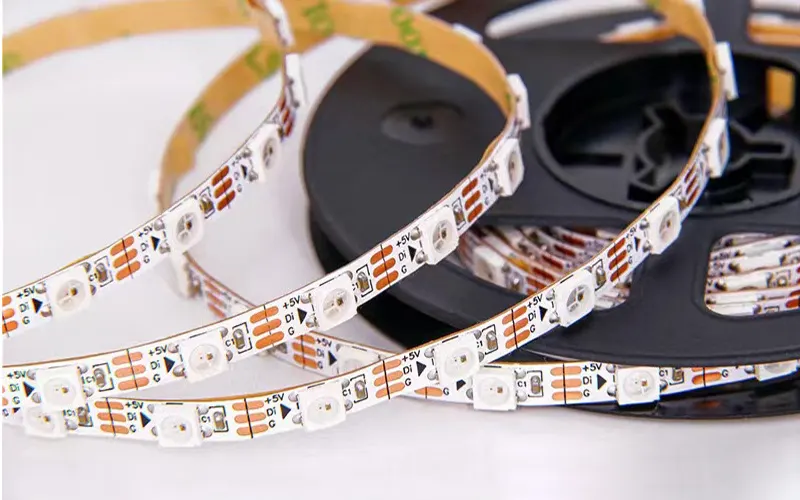
The core feature of RGBIC is its integrated control chip (IC), which allows individual LEDs or specific segments of the light strip to be controlled independently. Unlike traditional LED strips—which can only display a single color at any given time—RGBIC technology enables the strip to be divided into multiple independently controllable zones.
Please note that RGBIC does not refer to a specific type of LED chip or protocol; rather, it describes a lighting system that combines RGB LEDs with an integrated control IC. Different products may utilize various ICs and communication protocols, such as WS2811, WS2812B, WS2815B, SK6812, or other addressable LED ICs.
For instance, when a traditional RGB LED strip displays blue, the entire strip turns blue; if it switches to red, the whole strip changes to red simultaneously.
In contrast, with an RGBIC LED strip, different segments can display red, blue, and green at the same time. Furthermore, the controller can create dynamic lighting effects that flow along the length of the strip.
For this reason, RGBIC lighting is often referred to as “addressable LED lighting” or “independently controlled LED lighting.”
What kind of lighting effect does RGBIC provide?
RGBIC technology introduces independent control capabilities to the system. A control IC receives digital signals and determines which LEDs—or groups of LEDs—display specific colors and brightness levels. This enables the light strip to produce a wide range of effects, such as:
- Multi-color display
- Flowing light effects
- Chasing effects
- Rainbow effects
- Color gradients
- Water ripple effects
- Meteor effects
- Music-syncing effects
- Programmable animations
Take a 5meters/reel RGBIC LED strip as an example: it allows different sections of the strip to display a gradient transition—shifting from red to purple to blue, for instance—rather than simply displaying a single, uniform color across the entire length.
It is important to note that RGBIC does not refer to a specific type of LED chip or protocol. Instead, RGBIC describes a lighting system that combines RGB LEDs with an integrated control IC. Different products may utilize various ICs and communication protocols—such as WS2811, WS2812B, WS2815B, SK6812, or other addressable LED ICs.
How Does RGBIC Work?
The fundamental principle of RGBIC is digital control, which allows for custom programming. RGBIC light strips typically consist of RGB LEDs, integrated control ICs, a PCB (Printed Circuit Board), and a power supply. The controller sends digital signals to the ICs on the strip.
Each IC reads the received data, determines the lighting parameters for its corresponding LED or group of LEDs, and then passes the remaining data to the next IC. This creates a series of independently controllable lighting zones.
For example, consider a strip with 100 addressable LEDs; a compatible controller can send instructions such as the following, resulting in a multi-colored lighting effect across the entire continuous strip:
- LEDs 1–20: Red
- LEDs 21–40: Orange
- LEDs 41–60: Yellow
- LEDs 61–80: Green
- LEDs 81–100: Blue
The specific control method depends on the IC and protocol used. Some RGBIC products utilize single-signal communication, while others employ dual-signal or data-backup designs. Therefore, the controller must be compatible with the strip’s specific IC and protocol.
Can RGBIC LED Lights Display White?
Yes, RGBIC can produce light that appears white to the eye by mixing red, green, and blue light; however, this does not mean that every RGBIC light strip delivers high-quality white light.
Standard RGB LEDs contain red, green, and blue LED chips. By adjusting the brightness of these three colors, the system can synthesize light that appears white to the human eye.
However, there is a difference between white light created by mixing RGB colors and white light produced using dedicated white LED chips. For applications requiring precise white lighting, RGBW or RGB+CCT light strips may be more ideal solutions. RGBW products include a dedicated white LED channel, enabling the strip to produce more natural and adjustable white light.
- For example:
- RGB Red, Green, Blue, and mixed colors
- RGBIC Multiple RGB colors and dynamic effects
- RGBW RGB colors + dedicated white light
- RGBICW Addressable RGB + dedicated white light (combined design)
Therefore, if the primary goal is to create colorful decorative lighting effects, RGBIC is an excellent choice; however, if the project requires both colorful lighting effects and high-quality white light, then RGBW or RGBICW should be considered.
What Is the Difference Between RGB and RGBIC?
The main difference between RGB and RGBIC lies in whether independent control is supported. Standard RGB light strips typically only allow the entire strip to change color uniformly. More details, pls check RGBIC vs. RGBWW
In contrast, RGBIC light strips allow different segments or individual pixels to display different colors simultaneously.
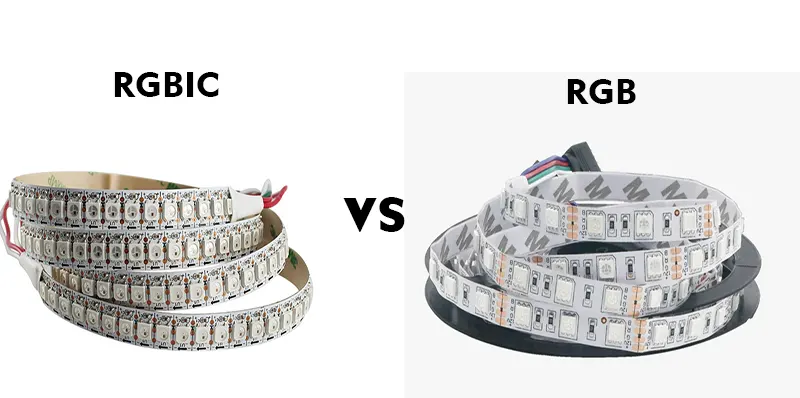
RGB light strip effect
Red → Red → Red → Red → Red
RGBIC light strips can display
Red → Purple → Blue → Green → Yellow
Therefore, RGBIC is indeed highly suitable for creating dynamic lighting effects.
| Feature | RGB LED Strip | RGBIC LED Strip |
|---|---|---|
| Basic colors | Red, Green, Blue | Red, Green, Blue |
| Independent control | No | Yes |
| Multiple colors simultaneously | Usually No | Yes |
| Chasing effects | Limited | Excellent |
| Dynamic animations | Basic | Advanced |
| Installation complexity | Lower | Higher |
| Controller requirement | RGB controller | Compatible addressable controller |
| Typical applications | General decorative lighting | Dynamic & programmable lighting |
RGB is generally the better choice when you need simple, synchronized color effects, whereas RGBIC is more suitable when the lighting requires dynamic effects, gradients, animations, or multi-color displays.
Are RGBIC Lights a Good Choice?
RGBIC lights are an excellent choice when projects require dynamic and programmable lighting effects. One of their key advantages is visual flexibility; a single LED strip can display a wide variety of lighting scenes, eliminating the need to install multiple separate strips.
RGBIC is also ideal for applications requiring lighting synchronization with music, video, specific events, or preset programmed sequences.
Another major advantage is that RGBIC technology enhances the visual impact of curved architectural structures, walls, ceilings, stages, display installations, and signage.
When selecting RGBIC lighting, consider:
- LED voltage
- IC type
- Control protocol
- LED density
- Pixel/m
- Cut/length
- Maximum strip length
- Controller compatibility
- Power consumption
- IP rating
- Installation environment
What are the Use Cases for RGBIC Lighting?
Thanks to their ability to create dynamic and programmable visual effects, RGBIC lights are suitable for a wide range of applications, including residential settings and various architectural projects.
Architectural Lighting
RGBIC LED strips can be installed on ceilings, walls, pillars, building facades, and around various architectural structures to create stunning color gradients and dynamic flowing effects.
Esports Rooms & Game Rooms
RGBIC lighting is highly popular in esports and game rooms, as its rich colors and dynamic effects create an immersive atmosphere. When supported by the control system, the lighting can even synchronize with music or in-game content.
Bars and KTVs
RGBIC technology delivers vibrant, dynamic lighting effects that are ideal for bars, nightclubs, KTV private rooms, and other entertainment venues where shifting lighting scenes are often required.
Stage and Event Lighting
RGBIC LED strips can be integrated into stage structures, decorative frameworks, exhibition booths, and various event installations. Their programmable nature makes it easy to create lighting sequences that synchronize with the rhythm of a performance.
LED Signage and Displays
RGBIC technology is ideal for creative signage, decorative displays, retail merchandising, and visual marketing, using dynamic color effects to capture the audience’s attention.
Architectural Facade Media Lighting
For large-scale architectural projects, addressable RGB LED strips can create flowing color effects across building facades. With the right controllers and software, lighting designers can program complex lighting sequences that span multiple zones.
Decorative Indoor Lighting
RGBIC light strips are also suitable for use under cabinets, behind televisions, around furniture, and within dining areas, hotels, and homes, serving decorative rather than general lighting needs.
Do RGBIC Lights Support Custom Programming?
Yes, many RGBIC LED strips support custom programming, provided that the IC protocol and controller are compatible with the required control system.
RGBIC LED strips utilize what is known as addressable LED technology. With a programmable controller, users aren’t limited to preset colours; they can precisely configure the colour, brightness, timing, and transition sequence for each pixel or control zone.
For instance, a lighting designer could program the following sequence:
Red → Orange → Yellow → Green → Blue → Purple, sequence can then move continuously along the LED strip.
More advanced systems can also support custom animations, gradients, wave patterns, chasing effects, flashing modes, and lighting effects synchronized with music.
Selecting the right controller is crucial for professional applications. Depending on specific project requirements, RGBIC LED strips can be controlled via SPI, DMX512, Art-Net, or other compatible systems.
If the project involves integration with professional stage or architectural lighting control systems, it is essential to verify the compatibility between the IC protocol and the controller before purchasing the LED strips.
Conclusion
RGBIC LED strip refers to an RGB lighting technology that integrates a control chip (IC), enabling independent control of individual LED beads or segments of the light strip. Unlike traditional RGB LED strips, RGBIC technology can display multiple colors simultaneously and produce dynamic effects such as chasing, gradients, color flowing, and programmable animations.
For professional installations, it is essential to verify key specifications before purchasing RGBIC LED strips, including LED voltage, IC type, control protocol, pixel density, controller compatibility, power requirements, and the protection rating (IP rating).
Please contact us for more information on addressable LED strips.
FAQs
RGBIC stands for Red, Green, Blue, and Independent Control. Lighting described as RGBIC features an integrated control circuit (IC) that allows for the independent control of different sections of the LED strip.
The main difference between RGB and RGBIC lies in how the LEDs are controlled. Traditional RGB LED strips typically operate as a single, synchronized lighting unit. In contrast, RGBIC divides the strip into independently controllable LEDs or segments, allowing different sections to display different colors simultaneously.
Yes, but they do so by mixing red, green, and blue light to produce a light that appears white.
Yes, many RGBIC LED strips support programmable lighting effects. However, the specific effects achievable depend on the type of IC used. Since individual LEDs or strip segments can receive distinct color commands, a wide range of dynamic effects can be created when paired with a compatible controller.
Yes, many RGBIC LED strips can be cut, but this must be done at the manufacturer-designated cut points. Cutting at the wrong location may interrupt the data signal, causing the remaining section of the strip to malfunction.