
LED strip lights have become a popular choice for interior lighting, and are certainly one of the most popular options for modern bedroom lighting. This is because they are slim, energy-efficient, and flexible, allowing for both practical and decorative lighting effects. But are LED strip lights really suitable for use in bedrooms? Are LED strip lights safe for bedroom use?
What is the Core of Bedroom Lighting?
Bedroom lighting is essential because it is primarily a space for rest and sleep. The best bedroom lighting should meet three core needs: comfort, flexibility, and non-glare.
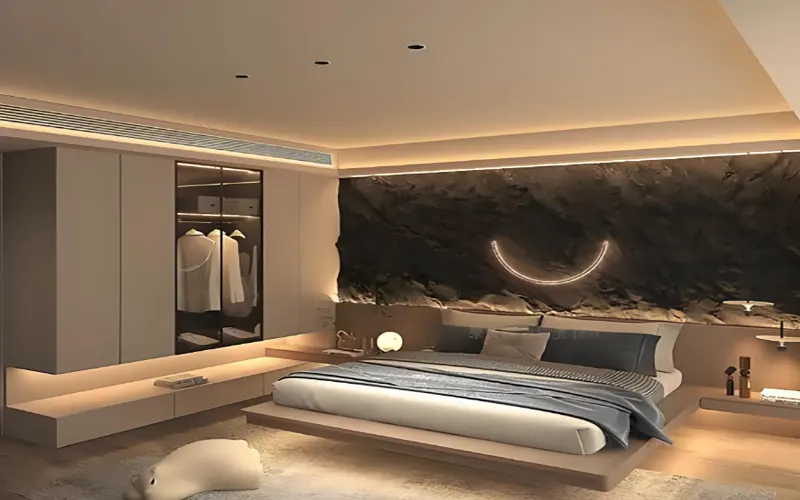
Comfort
The bedroom is a space for rest, so the lighting should not be too bright or cool-toned. Soft, even lighting promotes relaxation. Generally, a color temperature of 2700K-3000K is recommended for bedrooms; experiencing this comfortable color temperature before bed helps promote restful sleep. Pls check What is the Best Light Color for Sleep?
Layered Lighting
Modern bedrooms typically require three types of lighting: ambient light, accent lighting, and mood lighting. We also need a main light source, and LED strip lights are ideal for creating atmosphere and providing supplementary lighting.
Adjustability
For bedrooms, dual-color LED strips (2700K/3000K + 6000K) are recommended, as adjustable brightness or color temperature LED systems better suit different scenarios. We can easily adjust the lighting when reading in bed or getting up at night.
LED strip lights are excellent as “indirect lighting” and “supplementary lighting,” and are superb at creating soft, even lighting in the bedroom.
Are LED Strip Lighting Suitable for Bedrooms?
Yes, LED strip lights are very suitable for bedrooms. They are primarily used for ambient lighting in bedrooms, and as long as you choose a reliable brand and install them correctly, they are a great option.
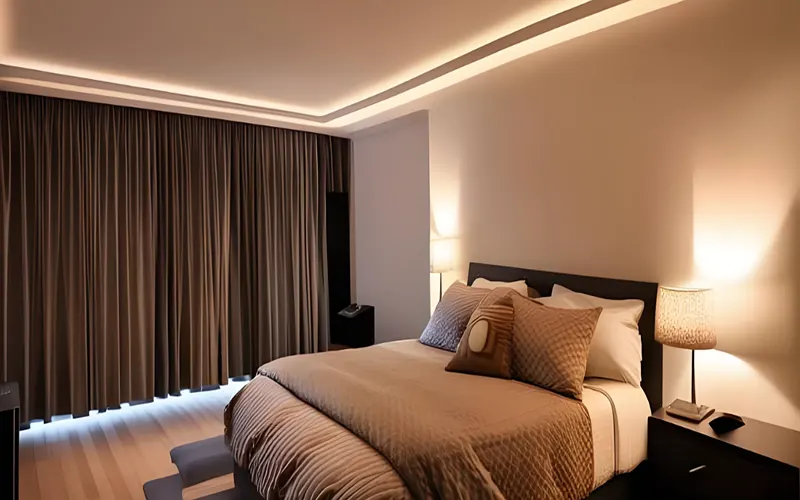
- High-quality LED strip lights are very safe at normal operating temperatures, with no risk of burns.
- Low voltage (such as 12V/24V) is safer, and less likely to cause electric shock even when installed near the bed or bedside table.
- They provide a more comfortable indirect lighting effect; using LED strips to conceal the light source avoids harsh direct glare.
- They have low power consumption and a long lifespan, making them suitable for everyday ambient lighting.
- Adjustable color temperature and brightness make it easier to create a relaxing atmosphere in the bedroom.
Where Should LED Strip Lights Be Installed in a Bedroom?
LED strip lights can be installed in many places in a bedroom to create excellent ambient lighting. Here are 5 common LED strip light installation locations in a bedroom, each significantly enhancing the space’s atmosphere and functionality.
Headboard Backlighting
This is the most common and practical installation location for LED strip lights: behind the headboard. It provides soft background lighting that isn’t harsh on the eyes before bed. It also provides a gentle light for getting up at night without disturbing sleep.
Ceiling Cove Lighting
Installing LED light strips on the ceiling is also a great option. These well-hidden light strips are perfect as indirect lighting for the bedroom. They can make the ceiling look lighter and create a floating effect. Additionally, they provide even main lighting and ambient lighting.
Inside the Wardrobe
Adding LED strip lights inside bedroom wardrobes can significantly improve the user experience, making it easy to find the clothes you want at night. The LED strips can be connected to a passive infrared (PIR) motion sensor, automatically turning on when the door is opened for added convenience.
Under-Bed Floating Light
LED strip lights under the bed enhance the visual appeal of the bedroom and provide safe lighting at night. They also create a “floating bed” effect, which is softer and more even than a traditional night light.
Bedroom Desk or Vanity Area
LED strip lights can be installed in the bedroom desk or vanity area, providing functional lighting. They also create a clean and sleek linear lighting effect.
What Color Temperature LED Strip Lights are Suitable for Bedrooms?
We believe the best color temperature range for a bedroom is 2700K–3500K, which is primarily warm tones. This creates a more comfortable feeling.
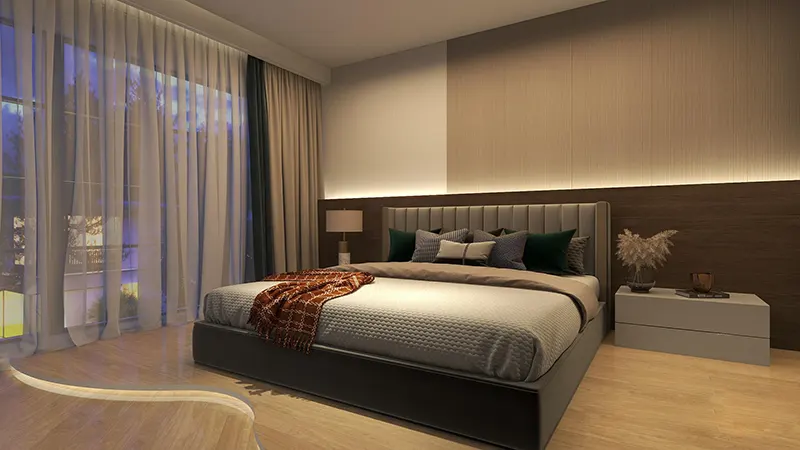
- 2700K: Closest to incandescent light, warm and relaxing, suitable for before bedtime.
- 3000K: Warm but slightly brighter, suitable for relaxing in the bedroom.
- 3500K: Slightly neutral white, suitable for areas requiring clearer vision, such as wardrobes and dressing tables.
Do LED Strip Lights Used in Bedrooms Need to Be Waterproof?
LED strip lights used in bedrooms are typically IP20 non-waterproof and do not require a waterproof rating (such as IP65 or IP67). However, if the LED strip lights are installed near windows, bay windows, or other locations that may be exposed to moisture, then a waterproof rating is necessary.
How to Choose LED Strip Lights for Bedroom Lighting?
When choosing LED strip lights for your bedroom, you need to consider the following factors. This will help you better enjoy your bedroom lighting. More details, pls read How to Install the LED Strip for Bed?
- Choose a high Color Rendering Index (CRI ≥ 90): A high CRI allows skin tones, clothing, and furniture colors to appear more natural.
- Flicker-free power supply: Ensure the use of certified LED drivers (such as UL, CE, ETL).
- Appropriate brightness: The brightness in a bedroom should be approximately 300–800 lm/m (for indirect and ambient lighting).
- Color temperature or adjustable color temperature (CCT Adjustable): If you want to adapt to different times of the day, it is recommended to choose a CCT dual-color temperature adjustable LED strip.
Summary
LED strip lighting are one of the safest, most flexible, and atmospheric lighting options for bedroom. However, it’s crucial to choose high-quality, low-voltage, flicker-free LED strips with an appropriate color temperature and install them in suitable locations to create a comfortable, safe, and cozy bedroom space.
For more high-quality LED strip lights, please contact our LED strip supplier.
FAQs
No, but you need to choose the correct color temperature and brightness. Using warm white light (2700K–3000K) in the bedroom, combined with low brightness and dimming functions, can help you relax and will not interfere with melatonin secretion.
LED strip lights use low voltage and are very safe. Although they do generate heat, the temperature is very low and within a safe range.
Yes, but you must cut along the marked “cutting lines” on the LED strip. However, if you cut in the wrong place, the entire strip will short circuit or burn out.
There’s no strict requirement for this; generally, LED aluminum profiles are not necessary. This is because LED strips aren’t very long, and the heat generated isn’t very high.