
Lighting and light fixtures are also extremely important in art museums. Lighting is not simply about “illuminating the space,” but is a crucial part of the exhibition experience. If the lighting design is inappropriate, even world-class works of art may lose their original charm due to lighting issues. So, what is the best lighting solution for art museum lighting fixtures? This article will analyze this in detail from multiple dimensions, including art gallery lighting fixtures, color temperature selection, CRI requirements, and specific lighting methods.
What Types of Lighting Fixtures are Used in an Art Gallery?
The lighting fixtures in art museums are neither uniform nor limited to a single type. Therefore, professional art museum lighting typically involves a combination of various fixtures, with each type serving a different purpose.
LED Track Spotlight
LED track spotlights are commonly used in art museums and are among the most important and frequently used lighting fixtures. Their simple design allows them to precisely illuminate individual artworks, emphasizing details and colors.
LED track spotlights offer many advantages, including adjustable angles and positions, support for different beam angles, and the ability to achieve high CRI (Color Rendering Index) and precise light control.
LED Wall Washer Lights
These lights provide overall illumination and background lighting for walls. Wall washer lights are not intended to highlight a specific artwork, but rather to maintain uniform brightness across the entire wall, providing a clean visual background for hung artwork.
LED wall washer lights are used for walls with continuous artwork displays and large exhibition spaces. They also reduce contrast between light and dark areas, enhancing the sophisticated feel of the exhibition hall.
LED Strips / LED Profile Lights
LED ribbon can be used for auxiliary and general lighting. They can be installed in concealed ceiling light coves and for perimeter lighting in exhibition halls.
They do not directly illuminate the artwork in an exhibition, but they reduce the contrast between light and shadow, thereby improving the viewing experience.
Specialty Lighting Fixtures (Custom-made Lights)
When attending art exhibitions, we can observe certain exhibits or installations that utilize lighting fixtures unlike those we typically see. These are primarily used for displaying artifacts and can also interact with the artwork.
What is The Best Lighting Fixtures for an Art Gallery?
The best lighting fixtures for an art museum are a combination of layered lighting. It’s a layered lighting scheme primarily using LED track spotlights and wall washing, supplemented by linear lighting.
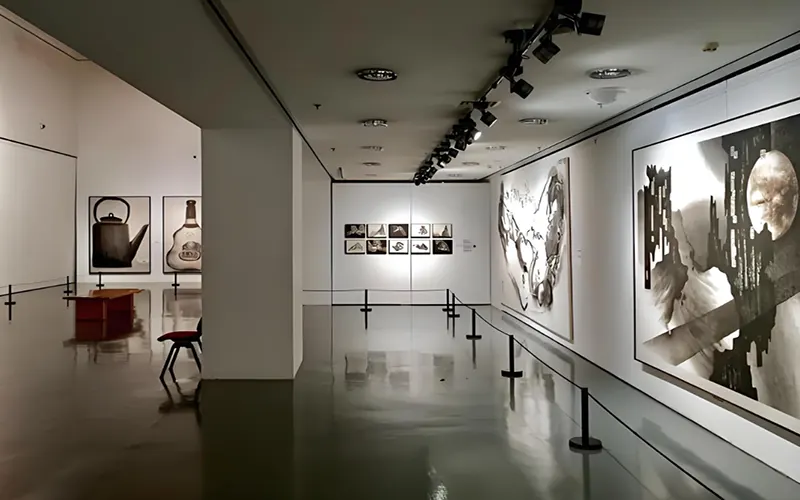
Precise Light Control to Protect Artwork
Artworks are very sensitive to light, especially oil paintings and paper-based works. Layered lighting allows for precise control of illumination and reduces the risk of artwork degradation.
Making the Artwork Stand Out
Highlight the characteristics of the artwork through the contrast between accent lighting and background lighting, thus capturing the audience’s attention.
Adapting to the needs of frequent exhibition changes
Art museums are not fixed exhibition spaces; every artwork inside is repeatedly changed, and new works are added regularly. Track lighting systems and adjustable fixtures can significantly reduce future maintenance costs.
Should Art Galleries Use 2700K or 3000K Color Temperature Lighting?
We all know that color temperature has a significant impact on art display, so choosing the right color temperature is crucial. 2700K color temperature is characterized by its warm, yellowish tone, and it tends to enhance colors. 3000K, on the other hand, is naturally warm white, resulting in more realistic colors.
We recommend 3000K for art gallery lighting because it is closer to the appearance under natural light and prevents whites from appearing yellowish. It also provides more accurate color rendering of red, blue, and green.
2700K is suitable for localized use, and we can consider using it for classical oil paintings and historical exhibitions, as it provides a more appropriate color tone.
Is 6000K Suitable for an Art Gallery?
6000K is not recommended for museum lighting. The light is too cool and lacks artistic appeal. The main problem is the high proportion of blue light, which causes significant visual fatigue. It also affects the artwork, potentially damaging the original color relationships.
We believe that 6000K is more suitable for places like factories and warehouses that require bright white light, rather than artistic spaces.
Is CRI Important for Art Gallery Lighting Fixtures?
CRI is extremely important in lighting fixtures, especially for art gallery lighting. Many users buy lighting fixtures without understanding CRI. So, what is CRI? CRI (Color Rendering Index) measures how closely the color of an object under artificial light matches its color under natural light.
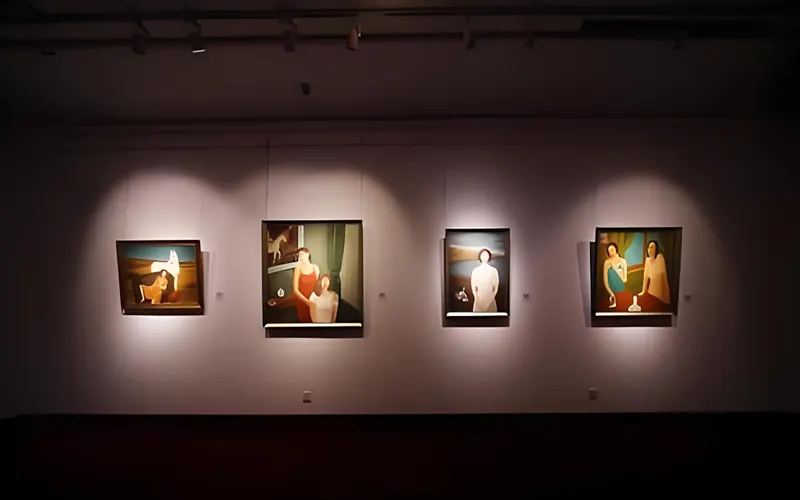
Art Museum Recommended Lighting CRI Standards
- Minimum requirement: CRI ≥ 90
- High-end art galleries: CRI ≥ 95
What are the consequences of using a low CRI (Color Rendering Index)? The colors will appear unnatural, looking dull and muddy. This can also lead to misunderstandings among viewers regarding the artwork.
How to Illuminate the Walls of an Art Museum?
When illuminating the walls of an art museum, it’s important to ensure that the distance between the light fixtures and the wall is appropriate (usually 1/3 of the wall height). This ensures even illumination without noticeable bright or dark stripes. It’s also important to avoid the top of the wall being too bright and the bottom too dark.
- Clean walls
- Clear image
- The space has a sense of order.
How to Illuminate Paintings Hung in an Art Gallery?
Some particularly important artworks require individual lighting. The core principles are: precise light control + minimizing reflections.
The lighting fixture should be positioned at an angle of approximately 30°, and should avoid shining directly onto the painting. Furthermore, choose an appropriate beam angle based on the size of the artwork. Anti-glare honeycomb filters can also be used.
- Small artworks: 15°–24°
- Medium artworks: 24°–36°
- Large artworks: 36°–60°
Summary
The core principle of art gallery lighting fixtures are not simply “brightness,” but rather precision, authenticity, and restraint. The main lighting fixtures used are LED track spotlights and wall washers. The color temperature is primarily 3000K, and it’s crucial that the Color Rendering Index (CRI) is greater than 90. Truly professional museum lighting isn’t about making the lighting fixtures visible, but about making the art visible.
FAQs
We believe the best lighting fixtures for art galleries are LED track lights, adjustable spotlights, and wall washers. These fixtures allow for precise control of beam angle, brightness, and direction, ensuring even illumination of artwork and avoiding glare and hotspots.
Primarily because LED lighting produces very little heat and ultraviolet radiation, which helps prevent artwork from fading and deteriorating. LEDs also offer stable color rendering, high energy efficiency, and dimmable control, making them ideal for both permanent and rotating exhibitions.
3000K is generally the best choice for museums. It provides warm, natural light while maintaining color accuracy. It balances warmth and clarity, making it suitable for paintings, sculptures, and mixed-media artworks.
Hanging paintings should be illuminated using adjustable LED spotlights or track lighting fixtures, with a lighting angle of 30°. This can be adjusted as needed to minimize reflections and glare while ensuring even light distribution across the artwork.