
With the widespread application of LED lighting—particularly LED-Streifenlichter—across residential, commercial, and engineering sector. LED technology has evolved from being merely an energy-efficient alternative into a mainstream staple and, in many cases, a standard feature. Consequently, an increasing number of users have begun to raise a key question: Do LEDs emit ultraviolet (UV) radiation? Does this pose any risk to human health? Is long-term use safe?
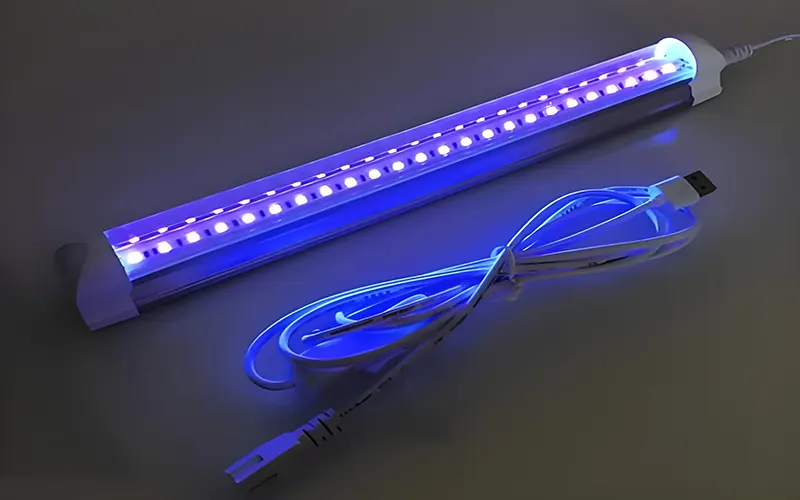
Do LEDs Light Emit UV Radiation?
From a scientific perspective, LED light strips emit virtually no ultraviolet (UV) radiation—a fundamental distinction that sets them apart from traditional light sources. Light is, in essence, a form of electromagnetic wave, with different wavelengths corresponding to different types of light. The spectrum visible to the human eye spans roughly 400 nm to 700 nm. Whereas ultraviolet radiation occupies the shorter-wavelength region (100 nm–400 nm).
In most white-light LED strips, light is generated not through high temperatures or electrical discharge. But rather through the release of energy resulting from electron transitions within semiconductor materials. A common method involves utilizing a blue-light chip to excite phosphors, thereby producing a white-light output. Throughout this process, the emitted spectrum remains strictly confined to the visible light range.
In contrast, light sources such as fluorescent lamps or mercury lamps typically generate light through gas discharge—a process. That inevitably entails the emission of a certain proportion of ultraviolet radiation. LEDs, however, effectively circumvent this issue at the very source.
Consequently, under normal operating conditions, we can affirm that LED light strips. Whether utilised for residential lighting or commercial applications—constitute a safe light source that generates virtually no ultraviolet radiation.
Do Full-Spectrum LEDs Emit UV Radiation?
The concept of “full spectrum” often leads to misunderstandings. Upon hearing the phrase “resembling sunlight,” many consumers immediately associate it with the presence of ultraviolet (UV) radiation.
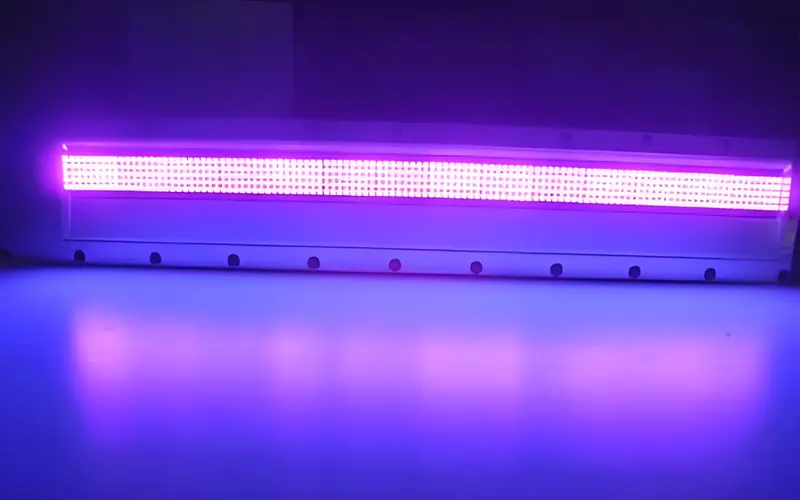
In reality, the term primarily emphasizes a high Color Rendering Index (CRI)—typically exceeding 90, or even 95. While such lighting appears more like natural light, it does not, in fact, contain every component found in natural sunlight.
Although natural sunlight does indeed contain UV rays, modern lighting products are deliberately designed to exclude this specific component. A more accurate description of so-called “full-spectrum LEDs” is that they provide a more continuous and authentic spectral distribution within the visible light range. Thereby enhancing the ability to accurately render the colors of objects.
It is only in a few specialized fields—such as medical equipment or horticultural grow lights. That UV components might be intentionally incorporated. Conversely, standard general-purpose LED strips—even those labeled as “full spectrum”—do not actively emit ultraviolet radiation.
Which Types of UV Radiation Cause Cataracts?
When discussing ultraviolet (UV) radiation, health concerns—particularly regarding eye safety—inevitably come to the fore. While there is a clear link between long-term UV exposure and the formation of cataracts. The critical distinction lies in which specific type of UV radiation is involved.
UV radiation is not a monolithic entity; rather, it is categorized into three distinct wavebands: UVA, UVB, and UVC. Among these, UVB poses the most direct threat to the eyes. It can penetrate the cornea and damage the proteins within the lens, thereby accelerating the formation of cataracts.
However, in typical indoor lighting environments, these risks are virtually non-existent when it comes to LED light strips. This is because standard LED light sources do not emit radiation within the UV spectrum—and, specifically, do not generate UVB, the type that poses the greatest hazard to the eyes.
In other words, if you are concerned about the risk of cataracts, your attention should be focused primarily on exposure to outdoor sunlight, rather than on indoor LED lighting.
Are LED Lights Harmful to People with Lupus?
For patients with Systemic Lupus Erythematosus (SLE), photosensitivity is an issue that demands serious attention. Many patients exhibit pronounced reactions to ultraviolet (UV) light; consequently, they exercise particular caution when selecting light sources.
Because its spectrum does not contain UV radiation, LED lighting does not trigger skin reactions in the same way that sunlight or UV lamps do. Theoretically, therefore, LED lighting constitutes a relatively safe choice.
Of course, this does not imply that the overall comfort of the lighting environment can be entirely disregarded. Some patients may be particularly sensitive to intense blue light; thus, when selecting LED light strips, priority may be given to products featuring warm color temperatures (such as around 3000K) or low-blue-light designs to ensure a gentler lighting experience.
Is It Safe to Use LED Lights in a Room?
LED lights are now utilized in a wide variety of lighting applications—such as bedrooms, living rooms, or offices. In this context, the answer is unequivocal: LED light strips represent one of the safest and most stable methods of indoor lighting currently available.
First and foremost, LEDs contain no mercury; consequently, they pose none of the environmental pollution risks associated with fluorescent lighting. Furthermore, they generate significantly less heat than incandescent bulbs, thereby reducing fire hazards and making them far more suitable for prolonged, continuous use.
Moreover, LED light strips offer excellent controllability, allowing users to adapt the lighting to the specific needs of different times of day and usage scenarios through features such as dimming and color temperature adjustment.
From the perspective of “healthy lighting,” a stable, flicker-free, and UV-free lighting environment is far more important than the mere pursuit of brightness. It is precisely in this regard that high-quality LED light strips demonstrate a distinct advantage.
Do Incandescent Light Bulbs Emit Ultraviolet Radiation?
Compared to LEDs, incandescent bulbs employ a more “primitive” method of light generation—producing light by heating a tungsten filament to a high temperature. Theoretically, this process generates a continuous spectrum ranging from infrared through the visible spectrum to a minute amount of ultraviolet light.
However, due to their limited operating temperatures—coupled with the absorption of short-wavelength light by the glass bulb—the actual amount of ultraviolet radiation emitted by incandescent bulbs into the environment is extremely faint and can be considered negligible.
The fundamental issue, however, lies in the extremely low efficiency of incandescent bulbs; a vast amount of energy is converted into heat rather than light. This not only constitutes a waste of energy but also limits their applicability in modern lighting contexts. Consequently, in most scenarios, incandescent bulbs have been gradually supplanted by LED strips.
Do LEDs Nail Lamps Emit UV Radiation?
Among all LED-related products, nail lamps constitute an “exception.” They do, in fact, emit ultraviolet radiation—a result of their functional design requirements.
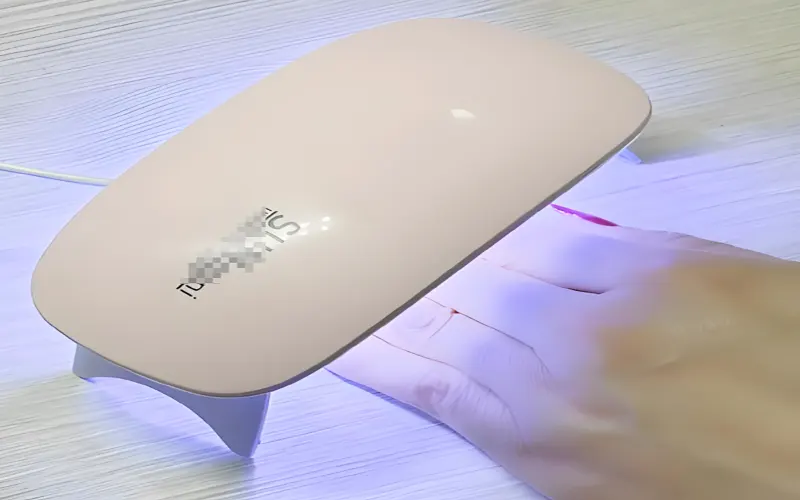
Specifically, nail lamps utilize the UVA spectrum to cure gel nail polishes. While the energy level of this type of UV radiation is relatively low, it nonetheless falls within the category of ultraviolet light. Therefore, in cases of frequent use, taking appropriate protective measures—such as applying sunscreen or wearing UV-protective gloves—is advisable.
It is particularly important to emphasize the following:
LED Nail Lamps ≠ Standard LED Light Strips.
Which Type of Light Bulb Is Healthiest?
When comprehensively evaluated from the perspectives of health, safety, and long-term usage, LEDs are undoubtedly the optimal choice available today; specifically, LED light strips offer distinct advantages in terms of flexibility and versatility of application.
Not only do they eliminate concerns regarding ultraviolet radiation and hazardous substances, but they also allow for the technical optimization of the lighting environment—for instance, by enhancing color rendering indices, minimizing flicker, and adjusting color temperature. Collectively, these factors ensure that LED lighting better aligns with the modern individual’s requirements for comfort and well-being.
In contrast, while incandescent bulbs produce natural-looking light, their energy efficiency is extremely low. Fluorescent lamps, though energy-efficient, present risks associated with mercury contamination and potential ultraviolet emissions.
Currently, LEDs have gradually come to dominate the lighting market. Consequently, within the new generation of lighting solutions, LED light strips have emerged as the mainstream choice that successfully balances both performance and health considerations.
Fazit
In the vast majority of lighting applications, LEDs light strips do not emit UV radiation, making them a safe and reliable lighting solution. Situations where UV exposure is a genuine concern typically stem from natural sunlight or specialized equipment, rather than from everyday indoor lighting. As technology continues to advance, hochwertige LED-Lichtstreifen are proving to be not only outstanding in terms of energy efficiency but also an increasingly trustworthy choice within the field of healthy lighting.
Häufig gestellte Fragen
In general, standard LED lights (including LED strip lights) do NOT give off UV. However, there are exceptions: Specialised horticultural LED grow lights may include small amounts of UVA (315–400 nm), can help influence plant characteristics.
Yes, fluorescent lights DO emit UV, but usually at very low and controlled levels.But they still emit more UV than LED lights.
Some do, while others do not. LED grow lights generally fall into two main categories: standard LED grow lights and full-spectrum/advanced grow lights. Only models specifically designed for this purpose include this feature—and typically, it is added in small, controlled amounts.
Generally speaking, as long as they are used properly, LED lights do not cause harm to the eyes. However, one should avoid staring at them for prolonged periods. It is also advisable to avoid glare and excessive brightness.